Running the club
A manager is judged on more than the last result. The board watches the table and the books, the players have moods of their own, and every contract eventually runs out. This chapter covers the work off the pitch.
Finances
The Finances screen shows the club's balance, which is also the most you can spend on transfer fees, the weekly wage bill against the wage budget the board allows, and the season's income and expenses so far against what is projected.
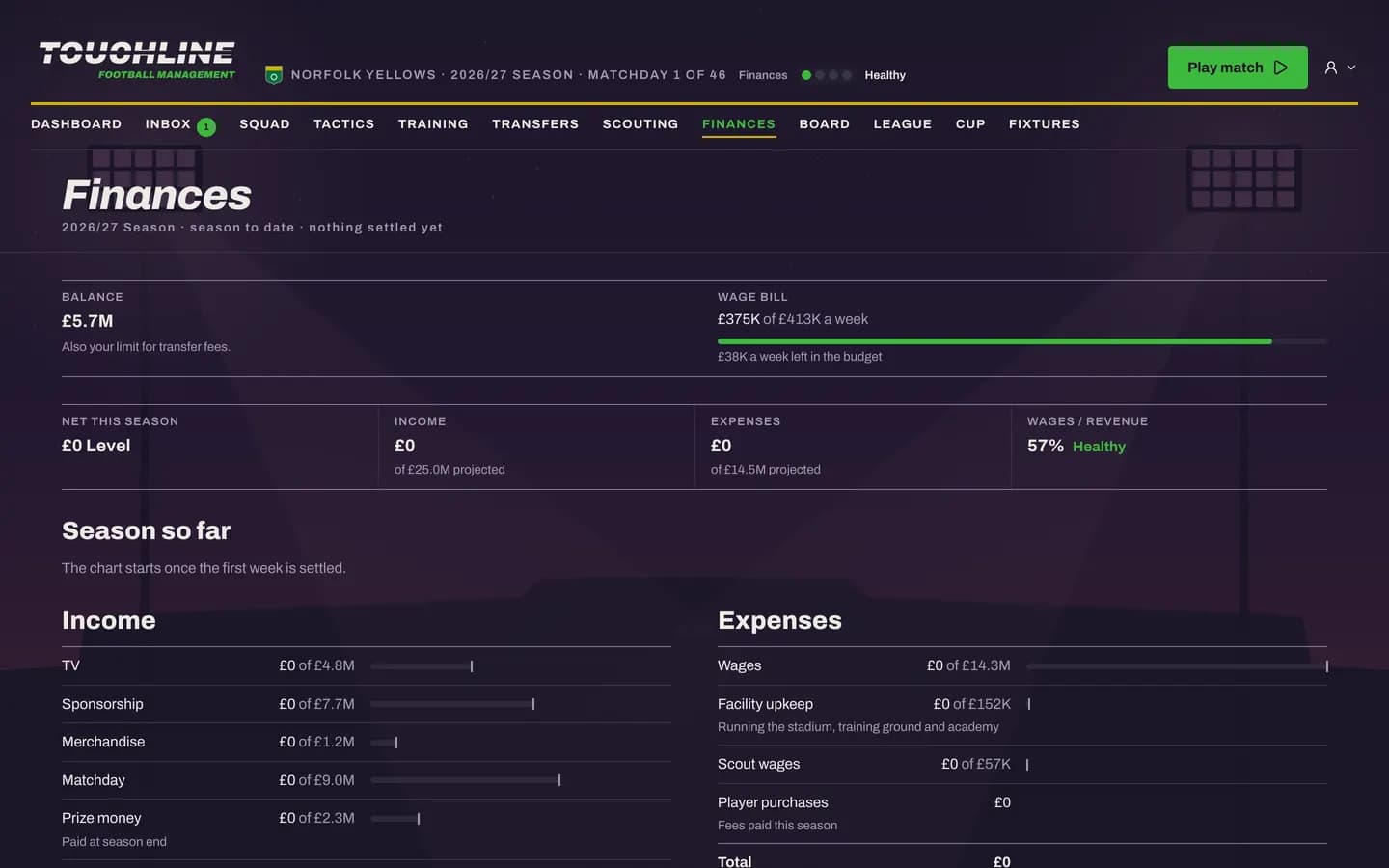
Money comes in from four places:
- Television, which rises with your division and your standing.
- Matchday and merchandise, which grows with your fanbase.
- Sponsorship, which follows the club's standing.
- Prize money for where you finish, plus money for every cup round you win.
Success feeds itself: a club that climbs the table and the divisions earns more, and can pay for a better squad. A club whose wages pass three quarters of its revenue is in crisis. Debt that runs on for seasons brings a transfer embargo, and a club whose debt passes a year's revenue goes into administration: ten points are deducted and other clubs may take its players for nothing.
The board
Each season the board sets a target from where the club stands, such as winning the league, finishing in the top half or avoiding relegation, with the exact position it expects.
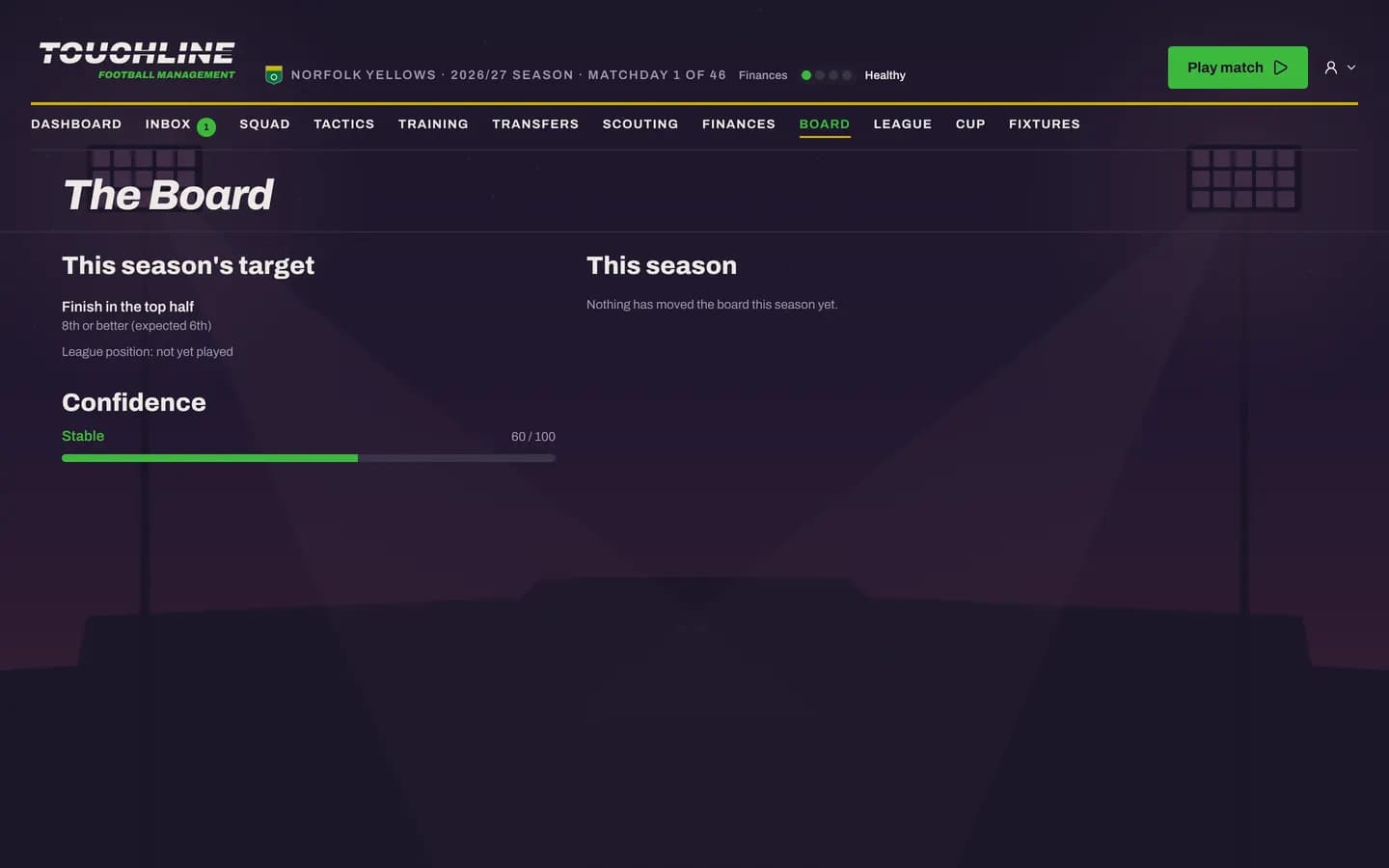
Board confidence. How the board rates your work, from 0 to 100. Results against the target move it after every match. If it falls low, the board warns you, and at the bottom it sacks you. Results against the target matter most, but money and your answers in the press room count too, and the final table settles the season.
If confidence falls low you will get a warning, then a final warning. Fall further after a final warning and you are sacked. That is not the end of your career: three clubs a division below come in with job offers, and you can pick one and start again.
Player morale
Every player has a mood, from Furious through Unhappy, Content and Happy to Ecstatic. It moves with:
- Results, weighed by the strength of the opposition: beating a better side lifts everyone more than beating a weaker one.
- Playing time against his standing in the squad. A key player left on the bench sulks; a backup is happy with the odd game.
- Team talks and what you say about the squad in the press room.
- Contract talks: a renewal offer he turns down costs morale.
A run of good or bad results builds on itself, and moods drift back towards the middle over time. A player who stays furious hands in a transfer request, and you have to decide whether to sell him or talk him round.
Contracts
Every player's contract ends on 30 June of a given year. The squad screen filters for contracts ending this season, and the inbox reminds you as the date comes closer. Offer a renewal with a wage and a length; if your offer is close to what he wants he comes back with a counter, and if it is too low he refuses. A player whose contract runs out leaves for nothing.
Press conferences
When you take a job you are unveiled to the press. A reporter asks three questions built from the club's facts, such as the board's target or the star player, and each of the three replies on offer has an effect on board confidence or player morale. You can skip it, but a confident, honest start is a cheap way to win some goodwill.
The inbox
The club's post arrives in the Inbox as you press Continue: match reports and league round-ups, transfer news and bids, scout reports, letters from the board and stories from The Touchline Gazette. Filter by matches, league, transfers, scouting or club, and items that need an answer link straight to the screen where you give it.